

My Voice Matters: The Young People’s Art Group

My Voice Matters: The Young People’s Art Group

My Voice Matters: The Young People’s Art Group

The role of art has become part of wider discussions in relation to the design of healthcare environments as it can create an increased sense of calm, ambience, and impact positively on staff and service users’ wellbeing. Participation and engagement from those with lived experience is vital to ensuring our service users benefit from therapeutic artwork.

Taken from Marcus Coates’ workshop

Follow Us

For the latest updates and news, follow us on our social channels.
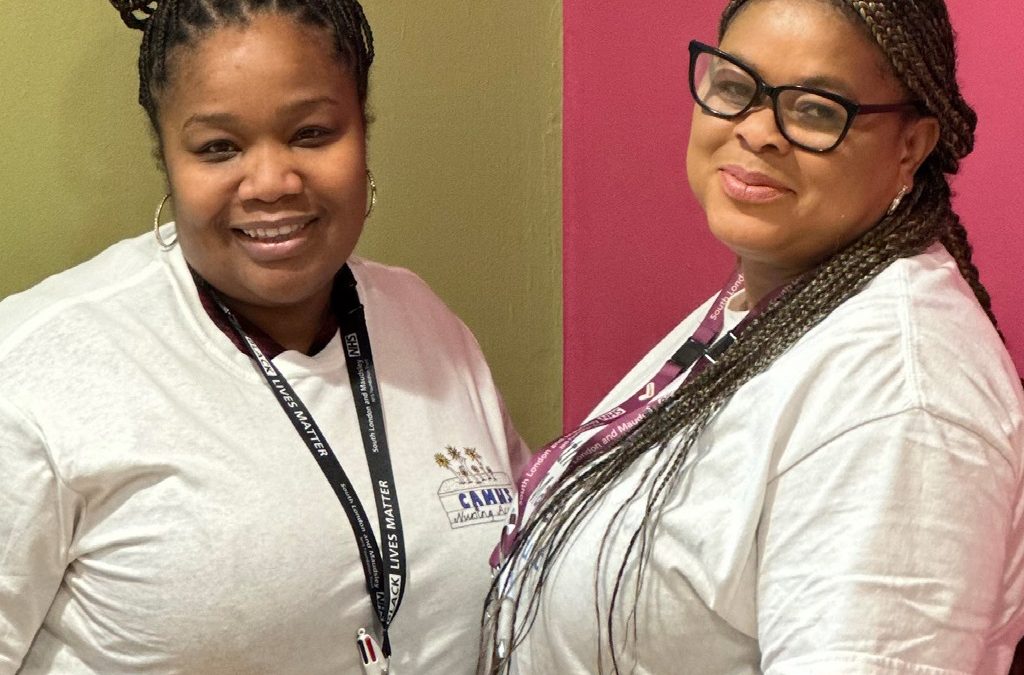
A new arts programme was developed with the Bethlem Gallery and includes site-specific artwork which will be displayed across the building. The Young People’s Art Group, a group of young people with lived experience of mental health conditions, was formed for this project and took a leading role in appointing the artists for each commission for the centre and providing feedback directly to the artist at each stage of their artwork.

The commissioned artists, Bethany Williams, Marcus Coates, Sahra Hersi, Sarah Carpenter and Carlos Cortes have also held workshops with several young people using our services and are currently preparing their final artwork to be installed at the Centre.

One of the young people to take part in The Young People’s Art Group was Naz. Most recently Naz edited text for pears Maudsley artwork interpretation to make text more accessible for young people. Speaking on her numerous involvements in the project, she explained:

“”I felt as if I’ve been encouraged to share my voice and had my opinions heard and given value during the participation work, I’ve taken part in. Participation work has been an important part of my recovery since I was 16 years old as it’s helped me set goals and achieve them and keep my mind occupied with something productive and purposeful. It has led me to many new and exciting opportunities and pushed me out of my comfort zone.”

Taken from Sahra Hersi’s workshop

“The most recent participation project I’ve taken part in is the Young People’s Art Group for Pears Maudsley. Exploring wellbeing and art is something that really interests me as I’d love to be an art therapist and art has always been something that has brought me a lot of comfort and helped me express myself during difficult times. I felt as if my voice mattered when I helped choose the artists who created the display cabinets for the Pears Maudsley Centre and when I was invited to speak at a roundtable discussion at the Science Gallery on behalf of the Young People’s Art Group.”

“In the past, I’ve also done participation work with other charities and organisations including one that helped me learn debating skills. It was a really enjoyable experience that still means a lot to me as debate training helped me feel more confident and learn to advocate for myself and express my needs and have open discussions about mental health. I feel debate training has opened a lot of doors for me and has been a stepping stone in the journey of participation work I’m involved in now, collaborating with Pears Maudsley and even continuing my participation work in a professional setting.

Taken from Bethany Williams’ workshop

My Voice Matters: The DISCOVER Programme

My Voice Matters: The DISCOVER Programme

My Voice Matters: Kay’s Story

It’s Children’s Mental Health Week and the theme of this year is My Voice Matters. The theme is all about empowering children and young people by providing them with the tools they need to express themselves.

This is Kay*. She took part in the DISCOVER programme, which is an award-winning schools-based workshop programme supporting 16-18 year olds to manage stress and worry. The DISCOVER team is based at South London and Maudsley. This week, she’s using her voice to support others.

Kay acknowledges that she used to be reluctant to open up, instead preferring to deal with things on her own. When her mum sadly passed away, she found it even more difficult to talk to people about her loss, and kept her feelings to herself. She thought that withholding her voice would mean protecting herself, and others too, from her pain. However, this left her feeling low, isolated and unable to focus on other things.

Follow Us

For the latest updates and news, follow us on our social channels.

I’ve always liked to be independent…I don’t like asking people for help.

Kay signed up to the DISCOVER programme after an assembly at her school advertising the workshop and how it could be helpful. It was in a 1:1 meeting with a member of the DISCOVER team that she first decided to ask for help. Although her family, friends and teachers were aware of her bereavement, they were not fully aware of how it had impacted her. In addition, she was feeling a lot of pressure to succeed at school, and was staying up late working, not getting enough sleep, and not taking any breaks to recharge.

You’re not alone. Genuinely, you’re not alone.

Everyone who comes to a DISCOVER workshop set themselves a goal to work on for the following three months, and are supported by a DISCOVER clinician to achieve their goals. Kay chose to ‘stop overthinking and think positively’ by practicing mindfulness regularly and making more time for herself and her hobbies. The programme helped her to feel listened to and she learnt to use her voice to open up more to others. This helped her value other people’s support, and their perspectives on her problems and to be kinder to herself.

With the right support and help, you can get through it.

As part of their commitment to person-centred care, DISCOVER continuously evaluate their work with young people. We use student feedback forms, online surveys and representative advisory groups to ensure that DISCOVER stays relevant, accessible and impactful for young people. In a project that we ran recently, to seek young peoples’ feedback on existing DISCOVER sessions, a clear message arose: enhance the student voice. ‘They felt that while DISCOVER’s tips for stress and anxiety management were useful and clear, they were more motivated to try them out if relatable peers could vouch for them and show how these ideas could be applied to the real lives of young people. 

DISCOVER subsequently set out to develop new videos that portray a diverse range of experiences, using the exact words of young people. Kay was a willing advocate for this project and volunteered her voice once more, in the hope that it would inspire others experiencing any kind of loss to reach out for support. Her voice represents that of thousands of others voices who take part in the DISCOVER programme each year, and who have shaped the service into what it is today.

 *Kay is a pseudonym used to protect her anonymity. In the video, her words are spoken by an actor.

Change the Story: Nina’s Story

Change the Story: Nina’s Story

Change the Story: Nina’s Chapter

Our CAMHS inpatient ward – The Maudsley Adolescent Unit (MAU) is an open unit offering mental health care for young people with serious mental illness such as psychosis or problems relating to their mood and require hospital admission. We have developed a national and international reputation for innovation and pioneered the introduction of a comprehensive, all-hours emergency admission service.

Within this unit, individuals such Nina, are the driving force behind our efforts to support and nurture the mental health of the next generation. Their commitment forms the very core of our Partnership. In this spotlight, Nina tells her story on how her team went above and beyond to support a young person to attend college from an inpatient CAMHS ward.

Nina

Nina

Ward Manager, CAMHS PICU

Young people admitted to inpatient CAMHS wards usually attend the on-site hospital school. The school is independent of the hospital and is run by Southwark council and staffed by an incredible group of teachers and support staff. They work with young people at various ability levels and support young people who are just starting secondary education, right up to young people who sit GCSE and A-Level exams whilst in hospital. However, fantastic as the school is, sometimes they aren’t able to provide the exact course a young person wants to do. Previously in these instances we may have encouraged a young person to look at alternative courses; ones which the hospital school could support them with. Or suggest doing different courses for a year and applying to the one they really wanted next year. However, over the summer we spoke with one particular young person on the ward and realised that this approach didn’t really work for them and wouldn’t be supporting them to achieve what they could.

This young person had been an inpatient with us for a number of months. Due to this she sat her GCSE exams at the hospital school at the Maudsley. During this period, she was also able to meet with a careers advisor at school to begin thinking about what she wanted to do post-16, as well as more long term. As a nursing and education team, we also began thinking about how we could support her with achieving her goals. She told us that her ultimate goal was to train as a nurse and work in healthcare; so, we started looking at what she would need to do to start on that path. After lots of conversations she decided that a college course in health and social care would be the best next step.

During evenings and weekends (when not revising for her GCSEs!) she began looking up different colleges and the courses they offered. Staff on the ward gave her advice on her applications and her parents were able to take her to some open days to meet with college staff. After a lot of work she found a college in South London that felt like the best fit for her and applied. Then following her fantastic GCSE results she officially enrolled in August!

Despite all the incredible work she had done towards getting her college place, the young person wasn’t able to be discharged before it started; and so, we began thinking about how best to support her to attend. Everyone was agreed that we wanted her to start college and that doing a course she was passionate about was so important. We were also conscious of not making too many big changes at the same time, so we all agreed that starting to attend college from the ward first made the most sense. We were really keen (as was she!) to make this as ‘normal’ as possible whilst ensuring she had all the support she needed.

We suggested doing some practice journeys between the ward and her college before her first day. Ray, an activity support worker on the ward, met with her to look up the route on public transport and plan the journey. The two of them the caught the bus there together to get familiar with the journey and where to go once she was at the college campus. Since then, she’s been attending all of her classes at college, and has begun making her own way there and back each day.

It was a tricky journey to get there at times, and the easiest solution all those months ago would have been to say the young person needed to be discharged before going to college full time. However, we all knew this wasn’t the best solution for her at the time; and we wanted to make sure we were thinking of what was important to her and doing whatever we could to support her in safely achieving those goals.

Follow Us

For the latest updates and news, follow us on our social channels.

Change the Story: Lauren’s Chapter

Change the Story: Lauren’s Chapter

Change the Story: Lauren’s Chapter
In the tapestry of any organisation, there are threads woven with extraordinary dedication and tireless effort. These threads belong to individuals who go above and beyond, turning ordinary tasks into extraordinary achievements. Their commitment, often behind-the-scenes, is the bedrock upon which success is built.

In this spotlight, we shine a well-deserved light on those who exemplify the spirit of hard work and dedication. These individuals are the driving force, the unsung heroes, and the heartbeat of our organisation and our shared vision to transform mental health for young people.

Their stories inspire us all to reach for greater heights, reminding us that with perseverance and determination, remarkable accomplishments are within our grasp.

Lauren

Lauren

Nurse, CAMHS PICU

Within inpatients CAMHS services we do out upmost to support the human rights and well-being of our service users while also maintaining safety. This can take many forms from supporting someone to bake a cake to gradually building up periods of leave back to their family home.

 One of our service users was struggling to find meaningful goals to work towards to help motivate them to remain safe while on the ward. As they had been in hospital for a considerable period there was a feeling that they felt hopeless in the idea that any meaningful progression could be made.

Across the ward multidisciplinary team (community teams’ input, family and social care), we wanted to do something to uplift their mood and positivity. A goal was set for the service user to be supported to attend their first ever concert. Due to the young person’s love and passion for music this felt like a meaningful activity for them as well as being something that was age appropriate and a ‘normal’ yet exciting milestone of adolescence. I’m sure most people can still remember their first gig, concert or festival as a teenager.

Within the team a week-by-week plan roughly spanning eight weeks was put in place to attempt to support the young person to achieve their overall goal. This was then reviewed each week and decided if the young person as ready to progress onto the next stage and if not, what things could be put in place to support each stage to be completed to help facilitate the overall aim. As the young person progressed further through the stages other challenges did arise such as who was going to take them? How would we transport them? and logistics around what time would they take their prescribed medication etc. This took a lot of coordination within the team and with the family, but each hurdle was overcome, and the day of the concert arrived.

This was a particularly unique experience as although within other services day trips are slightly more commonplace within a PICU setting they are often far from the norm. However, it was felt that for this young person this would be an important step in helping reintegrate them back into the community and so the team all worked together to ensure it took place. Being part of the team that accompanied them to this concert was a special experience as the young person could not quite believe they had managed to keep themselves safe enough for the trip to take place as well as having all the same excitement any person would have of seeing one of their favourite artists perform.

A new outfit from Primark, make-up applied, and McDonald’s consumed en-route made it feel all the more like an adolescent night out. Seeing anyone enjoy a new experience for the first time is exciting but when you have been part of the challenging journey with a young person of them keeping themselves safe enough to achieve their goals, it is a special experience.

Although one also full of anxiety as you imagine all the possible dangers and things that can go wrong. (We had tried to mitigate and plan for some of these by making sure the young person was aware we could leave if it all felt overwhelming) That aside when it all goes to plan to take a positive risk and seeing the joy it can bring to an individual is without a doubt the best part of the job.  

Follow Us

For the latest updates and news, follow us on our social channels.

‘Onwards and Upwards Parenting workshops’

‘Onwards and Upwards Parenting workshops’

‘Onwards and Upwards Parenting workshops’

Our Helping Families Team provides a comprehensive and supportive service for parents facing complex mental health issues as well as other stresses that my include poor housing, financial instability and chronic ill health. Multiple challenges can impact on their ability to look after themselves and their children and prevents them from parenting in the way they would like to. The team supports parents to reconnect with their children, feel more confident as a parent and to navigate the relationships they have with professional networks supporting their family.

Funded by Maudsley Charity’s Change Maker scheme, their latest programme promotes peer-led parenting workshops facilitated after parents have completed the Helping Families Programme and they have been discharged from the service. The events support parents to feel equipped with the necessary tools and support they need to overcome the challenges they face, without the need of another referral to specialist services.

How do the Helping Families Team support parents?

 We work with parents to identify their strengths and empower them so that they can communicate, manage their emotions, and hold the needs of their children in mind in ways which may feel more helpful, containing, and safe.  We have the privilege of witnessing their progress whilst they work with us. In these very difficult times it can be hard for parents to hold hope and continue to attend to their own needs in addition to the needs of their families.  The team explain how this peer- led programme is bringing together parents to create opportunities for social support and connection, and empower parents to create lasting, positive changes in their lives.

 What is the Change Maker Scheme?

 Change Makers exists to enable staff to complete small projects that could have a big impact on the quality of life for patients.  The scheme is a joint initiative between Maudsley Charity and the South London and Maudsley Trust’s Listening into Action (LiA) team. Maudsley Charity invests £100k into the scheme each year and the Listening into Action team will support staff to make applications, deliver the grants, and work with grant recipients to share the impact funding has had.

 The scheme is open exclusively to staff from the South London and Maudsley. Departments can apply of grants between £200 and £2,000 to get small projects off the ground in wards and services to improve access, outcomes or experience of people with mental illness. 

 How did the ‘Onwards and Upwards’ programme start?

 We consulted with parents that have used our service and responded to parents’ requests that they would really value the opportunity to connect with other parents with similar lived experiences and to also revisit specific parts of  the parenting programme that they had found helpful. With our Change Maker award we were able to hire space and provide food and refreshments for the parents in a beautiful historic local community venue which is easily accessible and offers a quiet, calm space. 

 We have facilitated three Onwards and Upwards events and we are planning to hold another in the Autumn. So far, 14 parents have attended, and the group is growing in strength and numbers.

 Has there been any feedback from the parents?

 The parents who attended expressed how important it was that they felt heard and seen during these events.  They valued the opportunity to share their experience of parenting before, during and after their time working with the Helping Families Team and felt able to speak freely and share their stories and experiences in ways which felt helpful and important for them.  Parents often lack confidence to connect with others but all who attended have created connections with each other outside the events.

 We kept events light and balanced. We had laughter along with tears. These events were designed to be empowering and validating for parents, delivered via a safe, nurturing environment where they could speak freely and share experiences and advice with other parents. Many of the parents that we work with are economically disadvantaged, so they really valued being cared for and feeling valued.

What do you hope for future events?

 In the future, we plan to invite their families along to a family-friendly event to celebrate their progress. We hope that the Onwards and Upwards events remind parents of the importance of continuing to prioritise their own needs alongside those of their families.  We know that parents who feel able to do this create very positive outcomes for their families.

Follow Us

For the latest updates and news, follow us on our social channels.

How clinical and research teams are working together to reduce stress in sixth form students

How clinical and research teams are working together to reduce stress in sixth form students

How clinical and research teams are working together to reduce stress in sixth form students
Over the last few years, rates of mental health disorders among young people have been rising. The latest data from the NHS found that in children aged seven to 16 years, rates rose from one in nine in 2017 to one in six in 2022. Adolescents aged 17 to 19 saw an even greater increase in mental health difficulties, rising from one in 10 in 2017 to one in four in 2022 – this means a quarter of young people in this age group were experiencing a probable mental health disorder.

Dr Stephen Lisk

Trial Manager for BESST at the Institute of Psychiatry, Psychology & Neuroscience (IoPPN) at King's College London

Adolescence is a key period for the prevention and treatment of depression and anxiety, as half of lifetime mental health problems start by age 14. We know that accessible and effective interventions are crucial to combatting these conditions, especially in the lives of adolescents where there are many barriers to help seeking, such as long waiting lists, inconvenient locations, competing time commitments, and fear of stigma. Researchers at the Institute of Psychiatry, Psychology & Neuroscience (IoPPN) at King’s College London and clinicians at South London and Maudsley NHS Foundation Trust have been working together to develop and test a school-based group workshop programme called DISCOVER to help reduce stress in young people aged 16-18 years.


The DISCOVER programme, led by Dr Irene Sclare from South London and Maudsley NHS Trust, uses psychoeducation and cognitive behavioural therapy (CBT) methods to equip sixth form students with tools to better manage their stress. Researchers in four areas of the UK, led by Dr June Brown, Reader in Clinical Psychology at King’s IoPPN, are running a large clinical trial, called the Brief Educational Workshops in Secondary Schools Trial (BESST), to investigate the effectiveness of DISCOVER.

So, what is my role in this project? I am trial manager for BESST, acting as a central coordinator to ensure all the clinical and research elements of this large research project come together as planned. You could therefore say I am a link between all the different teams – so let me explain how this collaboration works!

How did BESST and DISCOVER come together?

Based on an adult workshop model developed by Dr June Brown, Dr Irene Sclare started developing the DISCOVER stress workshops for adolescents. In 2014, they collaborated to run the first pilot study of the workshops in schools in South London. Their teams subsequently ran a slightly larger study in 2019 which showed the DISCOVER workshops were accessible and likely to be effective. However, a larger study was needed to rigorously investigate the effectiveness of the workshops – hence BESST was born.

Understanding the structure of BESST

BESST is a nationwide randomised controlled trial (RCT), funded by the National Institute of Health and Care Research (NIHR), with multiple institutions contributing to the project. There are two sides of BESST – research and clinical. The research side is led by King’s College London, with the IoPPN acting as the trial’s core research institution. However, we also collaborate with other research institutions across England to make this possible, including the Anna Freud Centre in London and Manchester, University of Bath, University of Northampton, and Middlesex University. Our research teams are responsible for all organisation of the trial, recruitment of schools, participants and workshop delivery teams, data collection and management, and data analysis and reporting findings.

On the clinical side of the trial, we continue a long-standing collaboration with the DISCOVER workshop team at South London and Maudsley NHS Foundation Trust, with the DISCOVER team leader, Dr Irene Sclare, as the clinical lead for BESST. The DISCOVER team have provided valuable input into workshop delivery within the trial and have been responsible for ensuring staff are fully trained to deliver the workshop programme. As trial manager, I have been working closely with members of the DISCOVER team to ensure the research and clinical aspects of the trial work together effectively.

What does the trial actually look like?

BESST is a cluster randomised control trial. This means that we recruit a number of students within several ‘clusters’ (in this case, school sixth forms) to participate in the trial. We then randomly allocate half of the sixth forms (and all participating students within them) to receive the DISCOVER programme delivered by a workshop delivery team (intervention arm), and half to receive their usual school care but no workshop (control arm). Our six research workers conduct assessments with all students at the start of the trial, and at three- and six-months after the workshop so we can understand what effect the workshop has on the students.

Working with clinical teams to run DISCOVER in schools

We’ve had a lot of interest and enthusiasm from students and staff to take part in BESST. We recruited 57 sixth forms across Greater London, Southwest England, Midlands, and Northwest England, with a total of 900 students taking part in the trial. With this trial being nationwide, it was far too large in scope for all workshops to be delivered by the core DISCOVER team at the Trust. We therefore recruited 16 Mental Health Support Teams (MHSTs) from 11 NHS Trusts across England to deliver DISCOVER in the sixth forms allocated to receive it. MHSTs are teams of mental health professionals that are already embedded within schools in England, making them ideal to be trained to deliver the workshop programme. The DISCOVER team ran a series of two-day training sessions with all MHSTs to ensure all staff were ready to deliver the workshops, as well as providing ongoing supervision sessions throughout BESST. It was then my role to ensure the schools were ready to receive the workshops being delivered by these MHSTs.

What happens next with BESST?

By the end of 2022, the last workshop had been delivered in the trial; in fact, every single workshop that was due to be delivered was completed according to plan, which is a fantastic achievement for everyone involved in the trial. We have now finished following up with students after the workshops, with the last students followed up in May 2023, and have been busy performing the analyses to understand how effective the workshop was. The results will be ready to publish soon – we hope they will inform our approach to early intervention and lead to wider roll-out to provide highly accessible support for as many young people as possible, giving them the resources they need to combat mental health difficulties during a highly vulnerable period.

Please do check out the BESST twitter account to follow along with our progress.

You can also read more about how DISCOVER was developed in Dr June Brown’s blog.

Follow Us

For the latest updates and news, follow us on our social channels.