How the King’s Maudsley Partnership is pioneering new, more effective treatment options for children with ADHD

How the King’s Maudsley Partnership is pioneering new, more effective treatment options for children with ADHD

How the King’s Maudsley Partnership is pioneering new, more effective treatment options for children with ADHD 

-By Professor Philip Shaw, Director of King’s Maudsley Partnership

Over the past 25 years, I’ve been lucky enough to meet thousands of children and young people with ADHD who have taken part in research. In that time, public awareness of ADHD has grown enormously. It’s now part of everyday conversations.  There have been great strides forwards in our understanding of the subtle brain and thinking differences that contribute to some of the experiences of living with ADHD – such as having problems staying focused.

But while awareness and understanding of ADHD have increased, the options available to support children and young people with ADHD have not kept pace. Most current treatments are medication-based, and while these can be effective, many families and young people tell us they want more choices — especially non-drug alternatives that are tailored to their child’s needs.

That’s where the King’s Maudsley Partnership comes in.

We are the world’s largest collaborative group of researchers and clinicians dedicated to improving outcomes for children and young people with ADHD. What makes us different is how we work: we don’t just study ADHD — we work with children and young people to ask the questions that matter most to them, and to find answers that can truly make a difference in their lives.


Our Approach

Our research spans three interconnected areas, each designed to drive innovation and real-world impact:

1. Discovery Science

We explore the societal and biological factors that influence ADHD – from cells to society, from neurons to neighbourhoods. Much of our current work focuses on how subtle differences in genes, the brain and thinking are tied to ADHD. We use cutting edge approaches particularly AI.

One exciting breakthrough we have already had involves using AI to predict how ADHD might develop over time. In a recent project, we combined genetic and brain imaging data to train a machine learning model that can predict — with over 80% accuracy — whether a child diagnosed with ADHD will continue to meet diagnostic criteria in adolescence. This kind of insight could be transformative for families and clinicians as they plan for the future and make decisions about care and support.

2. Collaborative Science

We’re redefining how ADHD is understood by working directly with young people. Together, we’re co-creating new ways to measure how ADHD affects daily life — especially in school. We also explore how ADHD overlaps with other neurodevelopmental conditions like autism, helping to build a more inclusive and accurate understanding of these experiences.

An example of this is our involvement within the Regulating Emotions – Strengthening Adolescent Resilience or RE-STAR Study. Many neurodivergent young people such as those with ADHD or autism traits develop depression during adolescence – but we currently don’t know which individuals are at risk, what underlying processes increase that risk or, perhaps most importantly, the best way to intervene to increase resilience to reduce that risk. RE-STAR will address these gaps by exploring the interplay between autism and/or ADHD traits, exposure to environmental stressors, and emotional responding in neurodivergent young people, in driving developmental pathways to depression.

3. Treatment Innovation

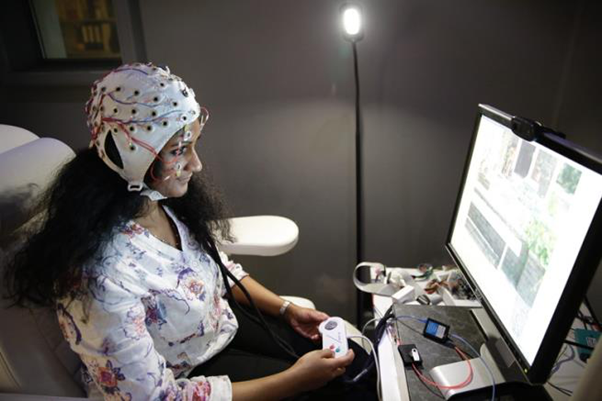
We’re developing and testing new interventions that go beyond medication. One area we’re exploring is brain therapies — treatments that aim to change brain activity in a safe, non-invasive way. Over decades of research we have identified the brain networks that function differently in some people with ADHD. Brain therapies targets these networks directly, rather than just managing behaviour.

We’re currently focusing on brain stimulationHere, a gentle, painless, tiny electrical or magnetic field is applied to specific brain regions to improve attention and self-control. We are still testing these treatments.  So far, we find they have minimal side effects and now we are looking to see if they offer longer-lasting benefits.

Other researchers are looking at how digital technologies, such as smart watches and mobile phone, can help youth with ADHD monitor how treatments impact on their attention and mood.  Another focus is using on-line resources to help improve the sleep of those with ADHD, again asking if this will improve quality of life.   


Pears Maudsley Centre 

The Pears Maudsley Centre for Children and Young People, will enable us to transform our understanding of ADHD. The new Centre will bring cutting-edge research, clinical care, and community engagement under one roof. Though our commitment to inclusion, and access to move inclusive technology we will be able to rebalance the inequalities that have existed in research until now.  


Want to learn more or get involved?

Join our free webinar ADHD: New Discoveries, Better Support on 4th November to hear more about the work happening on ADHD within the Partnership.

Stay connected with the King’s Maudsley Partnership as we continue to push boundaries, ask bold questions, and work alongside families and young people to shape the future of ADHD care. Email us at PMCYP@slam.nhs.uk to connect or follow us on our social media accounts.

Follow Us

For the latest updates and news, follow us on our social channels.

Transforming scientific discoveries into implementable interventions

Transforming scientific discoveries into implementable interventions

Transforming scientific discoveries into implementable interventions

Can translational incubators be an engine for strategic collaboration across the King’s Maudsley Partnership?

Zoe Firth

It was a great opportunity to meet with clinical and academic colleagues at the Neurodevelopmental Conditions Community of Practice meeting. We had some thoughtful and engaging conversations about how we can work together to develop research that reflects clinical priorities and can be translated into practice to make a real difference for children, young people, and their families accessing CAMHS. 

This meeting built on the Department of Child and Adolescent Psychiatry’s work to develop a translational research strategy, initiated in 2023. We started by looking back on the plans so far, setting out the strategy’s long-term ambitions and its focus on improving mental health outcomes for children and young people.  

Four areas for strategic priority were agreed: Prevention, Therapeutics, Personalisation, and Barriers to Care – selected for their strong potential to drive meaningful change.  

Each strategic area is structured around three translational research stages: 

  • Discovery – Understanding the causes, progression, and outcomes of neurodevelopmental and mental health conditions. 
  • Development – Designing and testing discovery-based interventions to prevent and treat child and adolescent mental health and neurodevelopmental conditions. 
  • Implementation – Developing partnerships with schools, charities, community organisations, and national and international governmental bodies to support the effective implementation of interventions.  

Collaboration with other academic and clinical groups, along with sufficient resources, is essential to optimise research across each of these stages. 

Providing the glue linking these stages was the concept of the translational incubator

Zoe Firth

Multidisciplinary teams of researchers, clinicians and patients working on a particular problem at a particular stage of the translational cycle. For example, the first incubator will turn real-world clinical problems into clear research questions, then design studies to explore them. Another one will use the research findings to develop new or adapt existing interventions.   

Emotional dysregulation as a case study 

One of the most pressing challenges in child and adolescent mental health is emotional dysregulation (EDR)—a difficulty in managing emotional responses that often underpins a wide range of neurodevelopmental and mental health conditions. It’s also one of the most common reasons young people seek support from Child and Adolescent Mental Health Services. 

As part of our strategic discussions within the King’s Maudsley Partnership, emotional dysregulation emerged as a key area of focus—cutting across diagnostic boundaries and offering a promising opportunity for innovation in both research and clinical practice. A key part of this process will be the Neurodevelopmental Conditions Community of Practice, which will help bring the strategy to life. 

This led to a central question posed to the Community of Practice: 

How can precision science methods be used to better understand emotion dysregulation in neurodevelopmental and mental health conditions, and this understanding be applied to better target existing and new interventions? 

Initial ideas include: 

  • Understanding the diversity of emotional dysregulation profiles within clinical populations. 
  • Identifying sub-groups with distinct emotional regulation patterns and explore how these vary across different diagnostic groups. 
  • Understanding the genetic, environmental, and neurocognitive factors that shape these profiles. 
  • Using these insights to refine existing interventions or develop new, transdiagnostic approaches that are more targeted and effective. 

We had strong engagement from the Community of Practice about the idea of establishing an incubator working group to support the development of the proposed research in emotional dysregulation, with Dr Asilay Seker (Clinical Research Fellow in Child and Adolescent Psychiatry) chairing. It would be great to keep the momentum going, so if you’re interested in getting involved, whether you’re a clinician, researcher, young person or parent/carer with lived experience, or from a partner organisation, please do get in touch at KMPCYP@slam.nhs.uk. 

Credit: Dr Amanda Bye, Dr Asilay Seker & Professor Edmund Sonuga-Barke  

Follow Us

For the latest updates and news, follow us on our social channels.

Digital health and CAMHS: Unpacking the Government’s 10-year Health Plan – Part 1

Digital health and CAMHS: Unpacking the Government’s 10-year Health Plan – Part 1

Digital health and CAMHS: Unpacking the Government’s 10-year Health PlanPart 1

By Prof. Johnny Downs and Zoë Firth, on behalf of the CAMHS Digital Lab 

Zoe Firth
Johnny Down

The Government recently released its 10-year Plan for the NHS. After an initial reaction, we have spent the past few weeks reading the plan and discussing it with colleagues in clinical services.  We are encouraged to see a shift to digital named as a key operational driver of change across the NHS. At the CAMHS Digital Lab, we create digital innovations and health informatics to support children and young people’s mental health services. Our work aligns with the plan in many ways – placing prevention, community care, and digital innovation at the heart of clinical services. Read on to find out more about how the CAMHS Digital Lab is already delivering on key ambitions in the 10-year Plan.   

Digital innovations that provide clinicians with more data to support decision-making.  We were pleased to see encouragement for NHS providers to make better use of IT systems, supporting activities like collecting outcome measures from patients as well as using dashboards designed for clinicians to visualise data. With the support of our NHS colleagues, we have successfully developed and implemented these technologies across our local CAMHS teams in Southwark, Lambeth, Lewisham and Croydon. We were interested in the emphasis on the use of ambient voice technology (AVT) to support clinicians by, for example, streamlining note taking. We agree that there is a lot of the potential for these technologies to reduce the administrative burden on clinicians, improve their job satisfaction, and provide more time for patients. There are still questions to be answered to ensure these tools are accurate across different clinical specialties and the needs of different patient groups. We hope to address some of these questions as we prepare for a trial we are conducting of AVT in Croydon and Lambeth CAMHS in partnership with Anathem.

Early intervention and prevention. These were named as critical to supporting children and young people’s mental health, with schools identified as key to implementing this ambition. Our work within the Maudsley Education Consultation Service has supported schools to understand and improve their students’ mental health. Together, we implemented our co-designed myJournE app, developed for students, caregivers, and teachers to monitor mental health risk factors and outcomes, and provide school leaders with a comprehensive, whole school mental health needs assessment. We are also supporting a pioneering pilot of digitally delivered Single Session Interventions for adolescents with anxiety and depression who are on the waiting list for community CAMHS. The goal is to provide short and accessible support to teens who may otherwise be at risk of deteriorating mental health while waiting to access CAMHS. 

In line with the early intervention and prevention aim, the plan highlighted how increasing the collection of information on children’s mental health – i.e., remote monitoring – can support earlier intervention and improve clinical decision-making. This starts in early childhood, with the plan outlining plans to move to the use of a digital ‘e-red book’. In our work within Gen2020, we’re developing a digital platform to track early developmental milestones, aiming to help parents and early childhood services accurately track development and access support more efficiently. We appreciated the Plan’s support for further expansion of data collection across different health services, including patient-reported outcome measures like those we have collected from children and young people through the myHealthE platform. Likewise, wearables – wearable devices like watches that monitor health data such as movement and heartrate – are valuable sources of information. Through our PACES+ project, we have brought wearables into mental health, piloting a device to track activity levels in children and young people trying to find the right dose of  ADHD medication. To support this ambition, we could also monitor mood through apps such as myJournE, currently in use in the international AIMS 2 Trials study capturing the daily experiences of autistic young people. The Plan also highlighted the need for improved ways of assessing the implementation of digital technologies in clinical services, as we are doing through our Digital Therapeutics Assessment Group. 

We’re sharing this work not just to highlight achievements, but to celebrate the parts of the plan that are grounded in strong evidence and are already making a difference in clinical settings. These uses of digital innovation and focus on early detection and prevention also aligns with other NHS priorities like the UK clinical research system transformation. Across our services, we’ve seen how digital innovation can transform the way we support children and young people’s mental health. This innovation is helping families feel more informed and empowered, while giving clinicians more time to focus on what matters most: working closely with families to deliver personalised, effective, and joined-up care. 

For more information please email us at camhsdlab@kcl.ac.uk.

Acknowledgements

Special thanks to Dr. Shuo Zhang and Jessica Penhallow for their support in preparing these blogs.

Follow Us

For the latest updates and news, follow us on our social channels.

Reflections from the Neurodevelopmental Conditions Community of Practice

Reflections from the Neurodevelopmental Conditions Community of Practice

Reflections from the Neurodevelopmental Conditions Community of Practice   

On Friday 18th July, members of the Neurodevelopmental Conditions Community of Practice (CoP) gathered to share learning, test new ideas, and explore what the NHS 10-Year Plan could mean for children and young people with neurodevelopmental conditions. 

AI and Sleep Testing New Ideas in Real Time 

A highlight of the session was Dr Laurence Telesia’s presentation on “Developing an AI chatbot to elicit clinically meaningful narratives from parents”. 

“The Neurodevelopmental Conditions Community of Practice was an excellent forum to discuss my research ideas and get feedback from a diverse range of professionals from clinical, academic and other backgrounds.  

My research interest is in sleep and ADHD, which we know from the existing literature is an important topic. Sleep problems impact the lives of many children and their wider families. But there has been very little qualitative research looking at the bedtime routine in this group, or identifying the sort of things that tend to go wrong. I’m looking to address this gap in the literature and explore whether AI can be used as a novel approach to get rich qualitative information from a much wider range of people than traditional qualitative methods can. 

I think that we, as researchers and clinicians, could learn from the principles of User Centred Design. In this approach, input is sought very early, and prototypes are repeatedly iterated. I was therefore grateful for the opportunity to present an early prototype of an AI chatbot to the Community of Practice. Having so many people test the technology at the same time, and then thoughtfully discuss the experience of using it and its future potential, has been really valuable.  

The group highlighted several improvements that could be made for the next iteration. There is no doubt that the Community of Practice has had a meaningful impact on the design of my research; within minutes of the meeting, I had updated the chatbot based on our discussions. I don’t think there would be another way to get such valuable feedback so quickly. “ 

What Could the NHS 10-Year Plan Mean for Neurodevelopmental Services? 

The session also included a discussion on the NHS 10-Year Plan for England, led by Ashish Jain, exploring its potential impact on children and young people with neurodevelopmental conditions. 

The Plan sets out three headline shifts: from hospital to community, from analogue to digital, and from sickness to prevention. These ambitions align closely with the ethos of the King’s Maudsley Partnership, but the group also surfaced important reflections: 

  • Hope and Curiosity – There was clear appreciation for the ambition of the Plan. Members were interested to understand more about how the Government would ensure that the funding, staffing, and infrastructure would match its ambitions. 
  • Equity and Access- Concerns were raised about regional disparities and whether children and young people with neurodevelopmental conditions will benefit equitably from reforms. Who will get access first? Will digital tools reach the digitally excluded? 
  • The Role of Lived Experience- Members emphasised the need to embed lived experience in service design — particularly when developing community-based and digital solutions for children, young people and families navigating complex neurodevelopmental journeys. 
  • Research Gaps and Opportunities- The Plan’s shift toward prevention and digital care opens doors for new research — but also raises questions. How do we measure impact for neurodiverse populations? What models are most effective for early intervention? 
  • Joined-Up Working- A consistent theme was the need for genuine cross-sector collaboration. Education, health, and social care must be aligned if the vision of early, community-based, preventative support is to be realised.

Get Involved 

Interested in contributing to the conversation or shaping what comes next?
📩 Contact us at pmcyp@slam.nhs.uk 

Let’s keep building this community—together. 

Follow Us

For the latest updates and news, follow us on our social channels.

Building Momentum: Shaping the Neurodevelopmental Conditions Community of Practice

Building Momentum: Shaping the Neurodevelopmental Conditions Community of Practice

Building Momentum: Shaping the Neurodevelopmental Conditions Community of Practice  

“We had a fantastic second meeting of the Community of Practice with some brilliant discussions around research projects and some really interesting contributions to how we want to develop the Community of Practice as a whole. It’s starting to build momentum and we’re very excited about the next steps.” 
Dr Jesse Campbell

Co-chair, Neurodevelopmental Condititions Community of Practice

On Friday 23rd May 2025, we hosted the second meeting of the Neurodevelopmental Conditions Community of Practice at the King’s Maudsley Partnership. Clinicians and researchers gathered for an energising session focused on strengthening collaboration, sharing ideas, and improving care for children and young people. This Community of Practice is designed to bring people together across disciplines, services, and lived experience to shape better outcomes through collective action. 
“It was a rich and stimulating discussion between clinicians and researchers, with thinking about how to better engage children, young people and families at its heart.” 
Dr Ashley Liew

Consultant Paediatric Neuropsychiatrist

Spotlight Session: Predicting Outcomes in ADHD 

We were joined by Dr Nicoletta Adamo, who presented her project: “Predicting Outcomes in ADHD: Perspectives and Priorities from Lived Experience.” 

This study is exploring whether a tool can be developed to better predict which children with ADHD are likely to experience fewer difficulties and which may need more support. By looking at a combination of personal traits and environmental factors, the research hopes to understand what drives success—and what gets in the way.

To make the tool as accurate as possible, the study also considers whether genetic information or ‘biomarkers’ could play a role. These can be gathered from a simple salvia sample and look at our genetic makeup, and might tell us about likely future health outcomes for a child with ADHD – for example whether a child is likely to experience depression in adolescence, or likely educational attainment. This study is doing a deep dive into understanding if that information was gathered and shared, how it could best be used to aid, not hinder outcomes. The project will launch in July and involve: 

  • Focus groups with young people (16–25), parents, clinicians and teachers
  • Exploration of how such tools are perceived—including emotional impact and ethical considerations
  • A co-designed, inclusive approach that ensures personalised support care, not stigma

The Community of Practice discussed the study. We discussed the importance of sharing this information about predicted outcomes in a considered way so they do not have unintended consequences that hinder a child’s potential. There was however much discussion also about the potential of biomarkers being able to improve treatment and preventative care by giving more information to clinical services and policy makers to ensure individuals receive the best possible support. 

“I found it particularly helpful to have this as a forum to get feedback on my research and how it can actually be meaningful for the Community of Practice—and to hear from clinicians about what’s helpful and implementable in practice.” 
Dr Nicoletta Adamo

Get Involved 

Interested in contributing to the conversation or shaping what comes next?
📩 Contact us at pmcyp@slam.nhs.uk 

Let’s keep building this community—together. 

Follow Us

For the latest updates and news, follow us on our social channels.

Can AI Make Mental Health Care Smarter, Faster, and Fairer for Children?

Can AI Make Mental Health Care Smarter, Faster, and Fairer for Children?

Can AI Make Mental Health Care Smarter, Faster, and Fairer for Children?

– By Professor Gustavo Sudre, Professor of Genomic Neuroimaging and Artificial Intelligence and Rosetrees Pears Chair of Bioinformatics, Department of Child & Adolescent Psychiatry

The journey to effective help for challenges to mental health in children can be long. While there are many effective interventions, clinicians are often unsure which intervention will most likely help. So, there is usually a trial-and-error approach, trying one intervention, then another, and sometimes even another, until the most helpful one is identified. It is a process that even the most dedicated clinicians struggle to navigate, and it can be overwhelming for families. This is why my work looks at how Artificial Intelligence (AI) can support and improve this process.

As a researcher working at the intersection of mental health, artificial intelligence, neuroimaging, and genomics, I’ve spent the past decade asking how we can improve. Can we make mental health interventions more precise and more inclusive? Can we move away from relying on observable behaviours and start using objective biological data to guide understanding, diagnosis, and treatment? And perhaps most importantly, can we ensure these improvements reach all children, not just a few?

I recently moved to King’s College London from the US-based National Institutes of Health to build a team focused on addressing exactly these questions. And while AI can’t fix everything, we’re seeing more and more ways it could meaningfully transform youth mental health care.

From symptoms to biology

Much of our current approach to mental health starts with symptoms—what a young person reports, how they behave, and how others describe them. That’s valuable, but it’s only part of the picture. Mental health conditions like attention-deficit/hyperactivity disorder (ADHD) and obsessive-compulsive disorder (OCD) often vary widely between individuals: this variability isn’t captured by the diagnostic label. That’s where AI can help.

We’ve used machine learning to uncover brain-based subtypes—we sometimes call these “biotypes”—in large datasets of children living with ADHD. These subtypes reflect real differences in brain function that aren’t always visible through clinical observation. And they matter: we’re beginning to find that children with different biotypes may respond differently to different treatments.

For example, one subtype we identified involves disruptions in attention-related brain circuits, and those children tend to respond particularly well to stimulant medications. We’re now asking if other subtypes or biotypes might benefit more from non-stimulant medication or behavioural therapies. The idea is simple: tailor treatment to biology, not just behaviour. But the potential impact—faster recovery, fewer side effects, and less family stress—is enormous.

Predicting what comes next

Another area where AI is proving decisive is predicting outcomes. One of the most common—and essential—questions from children, young people, and families is about what the future might hold. This is a hard question to answer. Even detailed clinical assessments don’t reliably predict whether a child with a diagnosis of ADHD, for example, will continue to have troublesome symptoms into adolescence or will resolve.

That’s changing. In a recent project, we combined genetic and brain imaging data from children diagnosed with ADHD and trained a machine learning model to predict their future outcomes. With over 80% accuracy, we can now predict whether a child will meet diagnostic criteria in adolescence or whether symptoms will subside. That level of insight can be transformative for families and clinicians trying to make informed decisions about support and intervention. Our next critical step is to see if this predictive tool works in other settings.

Mind the gap

But with this exciting future comes a critical challenge: equity.

AI models are only as good as the data they’re trained on. And too often, that data doesn’t fully capture the children who need help the most—those from underrepresented backgrounds, or those with the most severe symptoms who can’t complete some research procedures (such as having an MRI scan).

If we’re not careful, we risk building tools that work well for some groups but leave others behind, reinforcing existing disparities in healthcare.

That’s why equity isn’t an afterthought in our research—it’s a design principle. In the new Pears Maudsley Centre, we’re investing in child-friendly, movement-tolerant brain imaging technologies that work even when kids are anxious or active. We’re also building strong partnerships with schools and communities to recruit participants who reflect the full diversity of the population. And we’re designing our models with inclusion in mind, so they’re more likely to benefit all children, not just the easiest to study.

A broader effort, a shared goal

This work is part of a broader effort across the King’s Maudsley Partnership, where researchers, clinicians, and technologists work together to improve youth mental health care. From digital tools being trialled in clinics to large-scale studies on how social media and cognitive functioning interact, we’re creating a more connected, data-informed understanding of mental health.

We’re also closely aligned with the new Pears Maudsley Centre for Children and Young People, which will bring cutting-edge research, clinical care, and community engagement under one roof. It’s precisely the kind of setting where research like ours can translate into real-world impact.

Follow Us

For the latest updates and news, follow us on our social channels.