“Significant gaps” in ADHD research post 2020 hindering development of effective policy

“Significant gaps” in ADHD research post 2020 hindering development of effective policy

“Significant gaps” in ADHD research post 2020 hindering development of effective policy

  • Researchers find majority of latest data on ADHD prevalence low quality 
  • Best quality data suggests no significant rise in prevalence
  • Researchers stress the urgent need for high quality data to guide clinical practice and effective public health policy

New research from the Institute of Psychiatry, Psychology & Neuroscience (IoPPN) at King’s College London reveals a lack of reliable data tracking the prevalence and incidence of ADHD post-2020, resulting in significant gaps in an evidence base to develop realistic health policy, according to scientists.  

The research, which is the first systematic review of ADHD prevalence to be published since the start of the COVID-19 pandemic, highlighted the poor quality of studies available for inclusion. Despite this, the best quality data found no significant rise in the prevalence of ADHD. 

A total of 40 studies were included in this review. All included studies presented original data collected between January 2020 and February 2024 from the general global population. 

An analysis of the best quality data suggested that the rate of diagnosis of ADHD continues to vary internationally. In the USA, between 9.6 per cent and 10.5 per cent of children aged 3-17 years have been diagnosed1, compared to 7.5 per cent of 288,248 children and emerging adults aged 1-24 years in Canada, and 3.2 per cent of 70,437 children aged 0-17 years in Sweden. 

Recent studies that suggested higher rates of ADHD diagnosis were of low quality, using only self-reporting surveys, or parent/teacher reported symptoms, not clinical diagnoses. 

Dr Alex Martin, Lecturer in Psychology at King’s IoPPN and the study’s first author said, “The media has been concerned about a ‘surge’ in ADHD diagnoses for several years. While assessments and help-seeking may be increasing, our study has shown significant gaps in the tracking of ADHD prevalence, resulting in a frustratingly unclear picture.  

“The best data we have suggests that there has been no meaningful increase in ADHD prevalence, but most of the research is too biased to draw conclusions from.   

“When data is not updated, or isn’t reliable, scientists cannot complete high quality research. This causes problems for healthcare policy makers internationally and means that services which are already under pressure may encounter increased demand without receiving additional support”. 

Anecdotal reports suggest that the UK has seen an unprecedented rise in the number of children and adults seeking support for ADHD. The demand has exacerbated pressures on public services and increased already significant backlogs of people awaiting assessment. In the UK, a survey by the Petitions Committee in 2023 found that approximately 1 in 4 of those who responded face delays of up to two years for an assessment, while 1 in 10 are facing waits that exceed two years. 

Dr Samantha Brooks, post-doctoral researcher at King’s College London and the study’s senior author said, “Between January and May 2024, there were 25,080 media articles published on ADHD compared to 5,775 articles in the same period in 2014, with publications rising notably in 2020 and peaking in early 2023. 

“What we cannot account for, which is perhaps the biggest outstanding question, is why there has been an unprecedented increase in the number of people seeking help for ADHD.” 

Professor Philip Shaw, Director of the King’s Maudsley Partnership for Children and Young People said, “This study presents us with a puzzle. How can the ‘true’ rate of ADHD not be increasing despite rising demand for ADHD assessments?  It could well be that increased awareness of ADHD is leading more people to seek assessment, but only good quality and properly conducted research can tell us the cause.” 

Catherine Hinwood, NHS England’s ADHD Programme Director said, “This research backs the long-term vision set out in our recently published ADHD data improvement plan to have accurate national data on all aspects of ADHD – and we published our first ever national ADHD data set including estimated prevalence figures last week.

“Patients are waiting too long for an ADHD assessment and diagnosis and that’s why the NHS has also launched an independent taskforce to investigate the challenges facing services and help them manage the rising numbers of referrals, with support from across society.”

This study was funded by NHS England and was conducted by the NIHR Health Protection Research Unit in Emergency Preparedness and Response. 

Read more:

The changing prevalence of ADHD? A systematic review (DOI10.1016/j.jad.2025.119427) (Alex F Martin, G James Rubin, M Brooke Rogers, Simon Wessely, Neil Greenberg, Charlotte E Hall, Angie Pitt, Poppy

Ellis Logan, Rebecca Lucas, Samantha K Brooks) was published in the Journal of Affective Disorders. 

  1. The rate of diagnosis of ADHD in children is between 9.6% (of n=26,422) and 10.5% (of n=37,609) of children aged 3-17 years in the USA ((Li et al., 2023a) and (Li et al., 2023b), respectively) 
  2. UK prevalence is reported to be 1.8 per cent of male and 0.4 per cent of female children as reported in a 2018 study 

1. McKechnie DGJ, O’Nions E, Dunsmuir S, Petersen I. Attention-deficit hyperactivity disorder diagnoses and prescriptions in UK primary care, 2000–2018: population-based cohort study. BJPsych Open. 2023;9(4):e121. doi:10.1192/bjo.2023.512 

About King’s College London and the Institute of Psychiatry, Psychology & Neuroscience  

King’s College London is amongst the top 35 universities in the world and top 10 in Europe (THE World University Rankings 2023), and one of England’s oldest and most prestigious universities.  

With an outstanding reputation for world-class teaching and cutting-edge research, King’s maintained its sixth position for ‘research power’ in the UK (2021 Research Excellence Framework).  

King’s has more than 33,000 students (including more than 12,800 postgraduates) from some 150 countries worldwide, and some 8,500 staff. The Institute of Psychiatry, Psychology & Neuroscience (IoPPN) at King’s is a leading centre for mental health and neuroscience research in Europe. It produces more highly cited outputs (top 1% citations) on psychiatry and mental health than any other centre (SciVal 2021), and on this metric has risen from 16th (2014) to 4th (2021) in the world for highly cited neuroscience outputs. In the 2021 Research Excellence Framework (REF), 90% of research at the IoPPN was deemed ‘world leading’ or ‘internationally excellent’ (3* and 4*). World-leading research from the IoPPN has made, and continues to make, an impact on how we understand, prevent and treat mental illness, neurological conditions, and other conditions that affect the brain. 

www.kcl.ac.uk/ioppn | Follow @KingsIoPPN on TwitterInstagramFacebook and LinkedIn 

About the National Institute for Health and Care Research (NIHR) 

The mission of the National Institute for Health and Care Research (NIHR) is to improve the health and wealth of the nation through research. We do this by: 

  • Funding high quality, timely research that benefits the NHS, public health and social care; 
  • Investing in world-class expertise, facilities and a skilled delivery workforce to translate discoveries into improved treatments and services; 
  • Partnering with patients, service users, carers and communities, improving the relevance, quality and impact of our research; 
  • Attracting, training and supporting the best researchers to tackle complex health and social care challenges; 
  • Collaborating with other public funders, charities and industry to help shape a cohesive and globally competitive research system; 
  • Funding applied global health research and training to meet the needs of the poorest people in low and middle income countries. 

NIHR is funded by the Department of Health and Social Care. Its work in low and middle income countries is principally funded through UK international development funding from the UK government. 

Follow Us

For the latest updates and news, follow us on our social channels.
Building Momentum: Shaping the Neurodevelopmental Conditions Community of Practice

Building Momentum: Shaping the Neurodevelopmental Conditions Community of Practice

Building Momentum: Shaping the Neurodevelopmental Conditions Community of Practice  

“We had a fantastic second meeting of the Community of Practice with some brilliant discussions around research projects and some really interesting contributions to how we want to develop the Community of Practice as a whole. It’s starting to build momentum and we’re very excited about the next steps.” 
Dr Jesse Campbell

Co-chair, Neurodevelopmental Condititions Community of Practice

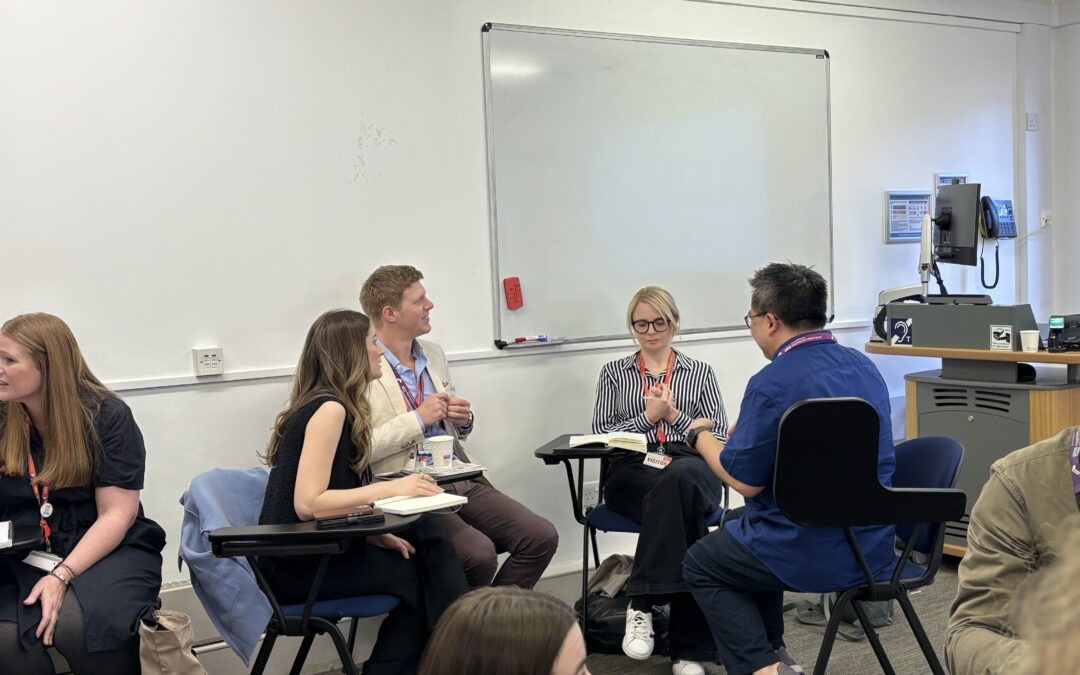
On Friday 23rd May 2025, we hosted the second meeting of the Neurodevelopmental Conditions Community of Practice at the King’s Maudsley Partnership. Clinicians and researchers gathered for an energising session focused on strengthening collaboration, sharing ideas, and improving care for children and young people. This Community of Practice is designed to bring people together across disciplines, services, and lived experience to shape better outcomes through collective action. 
“It was a rich and stimulating discussion between clinicians and researchers, with thinking about how to better engage children, young people and families at its heart.” 
Dr Ashley Liew

Consultant Paediatric Neuropsychiatrist

Spotlight Session: Predicting Outcomes in ADHD 

We were joined by Dr Nicoletta Adamo, who presented her project: “Predicting Outcomes in ADHD: Perspectives and Priorities from Lived Experience.” 

This study is exploring whether a tool can be developed to better predict which children with ADHD are likely to experience fewer difficulties and which may need more support. By looking at a combination of personal traits and environmental factors, the research hopes to understand what drives success—and what gets in the way.

To make the tool as accurate as possible, the study also considers whether genetic information or ‘biomarkers’ could play a role. These can be gathered from a simple salvia sample and look at our genetic makeup, and might tell us about likely future health outcomes for a child with ADHD – for example whether a child is likely to experience depression in adolescence, or likely educational attainment. This study is doing a deep dive into understanding if that information was gathered and shared, how it could best be used to aid, not hinder outcomes. The project will launch in July and involve: 

  • Focus groups with young people (16–25), parents, clinicians and teachers
  • Exploration of how such tools are perceived—including emotional impact and ethical considerations
  • A co-designed, inclusive approach that ensures personalised support care, not stigma

The Community of Practice discussed the study. We discussed the importance of sharing this information about predicted outcomes in a considered way so they do not have unintended consequences that hinder a child’s potential. There was however much discussion also about the potential of biomarkers being able to improve treatment and preventative care by giving more information to clinical services and policy makers to ensure individuals receive the best possible support. 

“I found it particularly helpful to have this as a forum to get feedback on my research and how it can actually be meaningful for the Community of Practice—and to hear from clinicians about what’s helpful and implementable in practice.” 
Dr Nicoletta Adamo

Get Involved 

Interested in contributing to the conversation or shaping what comes next?
📩 Contact us at pmcyp@slam.nhs.uk 

Let’s keep building this community—together. 

Follow Us

For the latest updates and news, follow us on our social channels.

New Associate Director of Philanthropy appointed

New Associate Director of Philanthropy appointed

New Associate Director of Philanthropy appointed  

Jenny Pentecost
We’re very pleased to announce that Jenny Pentecost has been appointed as Associate Director of Philanthropy for the King’s Maudsley Partnership (KMP). This role will provide leadership to our fundraising efforts in support of KMP, focused on children and young people’s mental health and the word-class activity that will be undertaken in the Pears Maudsley Centre. Jenny, who will be joining in August, is currently Head of Fundraising for Anna Freud, a mental health charity for children and families. She therefore brings significant and very relevant experience to the role.
I am delighted to join the King’s Maudsley Partnership team, leading the fundraising efforts for this visionary collaboration. Having spent the past eight years fundraising for children and young people’s mental health, I am excited to help amplify this truly groundbreaking initiative, share its impact with the wider sector, and continue to help drive vital funds towards improving the mental wellbeing of children and young people.”  
Jenny Pentecost

In August we will say goodbye to Jennie Meadows who has overseen huge impact as the Head of Fundraising for KMP. Over the past five years Jennie has been pivotal in securing Philanthropic funding which has enabled the development of the Pears Maudsley Centre for Children and Young People, due to open later this year.
“We look forward to welcoming Jenny to the KMP in the summer. Over the last few years, we’ve secured significant fundraising income for the new Pears Maudsley Centre – now we need to raise funds for the important work that the partnership will do, particularly in terms outreach and research. I know that Jenny and the team will help us secure even more income for our important work” 
Matt Gorman

Director of Philanthropy & Campaign at King's College London

Follow Us

For the latest updates and news, follow us on our social channels.
King’s Maudsley Partnership Welcomes Government Expansion of Mental Health Support Teams

King’s Maudsley Partnership Welcomes Government Expansion of Mental Health Support Teams

King’s Maudsley Partnership Welcomes Government Expansion of Mental Health Support Teams 

The Partnership has welcomed Government investment in mental health in schools.

The Government has announced a significant expansion of Mental Health Support Teams (MHSTs). The new investment means six in ten pupils will have access to a mental health support team by March 2026, with the rollout prioritised based on NHS identification of local need and reaching the most vulnerable children first.

This is a vital step in recognising the importance of early intervention in schools. Read the full announcement here.

Dr Bruce Clark, Clinical Director at the King’s Maudsley Partnership, said: 
Investing in MHSTs is a powerful tool in improving children’s mental health. Effective classroom-based workshops, led by MHSTs, can help young people build skills to tackle stress and symptoms of depression. This welcome increase in investment will help to deliver more evidence-based support and early interventions.

We are keen to see a long-term plan for investing in MHSTs and the workforce delivering it. Looking to the future, it’ll be important to consider the plight of the ‘missing middle’; those children who are not supported because their need is too great for MHST support and not severe enough for specialist mental health support.

As the King’s Maudsley Partnership continues to bridge clinical and academic expertise to transform children and young people’s mental health, we support initiatives that bring evidence-based mental health care directly into schools—and urge continued commitment to closing the support gap for those most in need. 

The King’s Maudsley Partnership for Children and Young People will transform our understanding and treatment of young people’s mental health through a unique collaboration between specialist clinicians from the South London and Maudsley NHS Foundation Trust and leading academics at King’s College London. Learn more about us.

Follow Us

For the latest updates and news, follow us on our social channels.
Can AI Make Mental Health Care Smarter, Faster, and Fairer for Children?

Can AI Make Mental Health Care Smarter, Faster, and Fairer for Children?

Can AI Make Mental Health Care Smarter, Faster, and Fairer for Children?

– By Professor Gustavo Sudre, Professor of Genomic Neuroimaging and Artificial Intelligence and Rosetrees Pears Chair of Bioinformatics, Department of Child & Adolescent Psychiatry

The journey to effective help for challenges to mental health in children can be long. While there are many effective interventions, clinicians are often unsure which intervention will most likely help. So, there is usually a trial-and-error approach, trying one intervention, then another, and sometimes even another, until the most helpful one is identified. It is a process that even the most dedicated clinicians struggle to navigate, and it can be overwhelming for families. This is why my work looks at how Artificial Intelligence (AI) can support and improve this process.

As a researcher working at the intersection of mental health, artificial intelligence, neuroimaging, and genomics, I’ve spent the past decade asking how we can improve. Can we make mental health interventions more precise and more inclusive? Can we move away from relying on observable behaviours and start using objective biological data to guide understanding, diagnosis, and treatment? And perhaps most importantly, can we ensure these improvements reach all children, not just a few?

I recently moved to King’s College London from the US-based National Institutes of Health to build a team focused on addressing exactly these questions. And while AI can’t fix everything, we’re seeing more and more ways it could meaningfully transform youth mental health care.

From symptoms to biology

Much of our current approach to mental health starts with symptoms—what a young person reports, how they behave, and how others describe them. That’s valuable, but it’s only part of the picture. Mental health conditions like attention-deficit/hyperactivity disorder (ADHD) and obsessive-compulsive disorder (OCD) often vary widely between individuals: this variability isn’t captured by the diagnostic label. That’s where AI can help.

We’ve used machine learning to uncover brain-based subtypes—we sometimes call these “biotypes”—in large datasets of children living with ADHD. These subtypes reflect real differences in brain function that aren’t always visible through clinical observation. And they matter: we’re beginning to find that children with different biotypes may respond differently to different treatments.

For example, one subtype we identified involves disruptions in attention-related brain circuits, and those children tend to respond particularly well to stimulant medications. We’re now asking if other subtypes or biotypes might benefit more from non-stimulant medication or behavioural therapies. The idea is simple: tailor treatment to biology, not just behaviour. But the potential impact—faster recovery, fewer side effects, and less family stress—is enormous.

Predicting what comes next

Another area where AI is proving decisive is predicting outcomes. One of the most common—and essential—questions from children, young people, and families is about what the future might hold. This is a hard question to answer. Even detailed clinical assessments don’t reliably predict whether a child with a diagnosis of ADHD, for example, will continue to have troublesome symptoms into adolescence or will resolve.

That’s changing. In a recent project, we combined genetic and brain imaging data from children diagnosed with ADHD and trained a machine learning model to predict their future outcomes. With over 80% accuracy, we can now predict whether a child will meet diagnostic criteria in adolescence or whether symptoms will subside. That level of insight can be transformative for families and clinicians trying to make informed decisions about support and intervention. Our next critical step is to see if this predictive tool works in other settings.

Mind the gap

But with this exciting future comes a critical challenge: equity.

AI models are only as good as the data they’re trained on. And too often, that data doesn’t fully capture the children who need help the most—those from underrepresented backgrounds, or those with the most severe symptoms who can’t complete some research procedures (such as having an MRI scan).

If we’re not careful, we risk building tools that work well for some groups but leave others behind, reinforcing existing disparities in healthcare.

That’s why equity isn’t an afterthought in our research—it’s a design principle. In the new Pears Maudsley Centre, we’re investing in child-friendly, movement-tolerant brain imaging technologies that work even when kids are anxious or active. We’re also building strong partnerships with schools and communities to recruit participants who reflect the full diversity of the population. And we’re designing our models with inclusion in mind, so they’re more likely to benefit all children, not just the easiest to study.

A broader effort, a shared goal

This work is part of a broader effort across the King’s Maudsley Partnership, where researchers, clinicians, and technologists work together to improve youth mental health care. From digital tools being trialled in clinics to large-scale studies on how social media and cognitive functioning interact, we’re creating a more connected, data-informed understanding of mental health.

We’re also closely aligned with the new Pears Maudsley Centre for Children and Young People, which will bring cutting-edge research, clinical care, and community engagement under one roof. It’s precisely the kind of setting where research like ours can translate into real-world impact.

Follow Us

For the latest updates and news, follow us on our social channels.