Digital health and CAMHS: Unpacking the Government’s 10-year Health Plan – Part 1

Digital health and CAMHS: Unpacking the Government’s 10-year Health Plan – Part 1

Digital health and CAMHS: Unpacking the Government’s 10-year Health PlanPart 1

By Prof. Johnny Downs and Zoë Firth, on behalf of the CAMHS Digital Lab 

Zoe Firth
Johnny Down

The Government recently released its 10-year Plan for the NHS. After an initial reaction, we have spent the past few weeks reading the plan and discussing it with colleagues in clinical services.  We are encouraged to see a shift to digital named as a key operational driver of change across the NHS. At the CAMHS Digital Lab, we create digital innovations and health informatics to support children and young people’s mental health services. Our work aligns with the plan in many ways – placing prevention, community care, and digital innovation at the heart of clinical services. Read on to find out more about how the CAMHS Digital Lab is already delivering on key ambitions in the 10-year Plan.   

Digital innovations that provide clinicians with more data to support decision-making.  We were pleased to see encouragement for NHS providers to make better use of IT systems, supporting activities like collecting outcome measures from patients as well as using dashboards designed for clinicians to visualise data. With the support of our NHS colleagues, we have successfully developed and implemented these technologies across our local CAMHS teams in Southwark, Lambeth, Lewisham and Croydon. We were interested in the emphasis on the use of ambient voice technology (AVT) to support clinicians by, for example, streamlining note taking. We agree that there is a lot of the potential for these technologies to reduce the administrative burden on clinicians, improve their job satisfaction, and provide more time for patients. There are still questions to be answered to ensure these tools are accurate across different clinical specialties and the needs of different patient groups. We hope to address some of these questions as we prepare for a trial we are conducting of AVT in Croydon and Lambeth CAMHS in partnership with Anathem.

Early intervention and prevention. These were named as critical to supporting children and young people’s mental health, with schools identified as key to implementing this ambition. Our work within the Maudsley Education Consultation Service has supported schools to understand and improve their students’ mental health. Together, we implemented our co-designed myJournE app, developed for students, caregivers, and teachers to monitor mental health risk factors and outcomes, and provide school leaders with a comprehensive, whole school mental health needs assessment. We are also supporting a pioneering pilot of digitally delivered Single Session Interventions for adolescents with anxiety and depression who are on the waiting list for community CAMHS. The goal is to provide short and accessible support to teens who may otherwise be at risk of deteriorating mental health while waiting to access CAMHS. 

In line with the early intervention and prevention aim, the plan highlighted how increasing the collection of information on children’s mental health – i.e., remote monitoring – can support earlier intervention and improve clinical decision-making. This starts in early childhood, with the plan outlining plans to move to the use of a digital ‘e-red book’. In our work within Gen2020, we’re developing a digital platform to track early developmental milestones, aiming to help parents and early childhood services accurately track development and access support more efficiently. We appreciated the Plan’s support for further expansion of data collection across different health services, including patient-reported outcome measures like those we have collected from children and young people through the myHealthE platform. Likewise, wearables – wearable devices like watches that monitor health data such as movement and heartrate – are valuable sources of information. Through our PACES+ project, we have brought wearables into mental health, piloting a device to track activity levels in children and young people trying to find the right dose of  ADHD medication. To support this ambition, we could also monitor mood through apps such as myJournE, currently in use in the international AIMS 2 Trials study capturing the daily experiences of autistic young people. The Plan also highlighted the need for improved ways of assessing the implementation of digital technologies in clinical services, as we are doing through our Digital Therapeutics Assessment Group. 

We’re sharing this work not just to highlight achievements, but to celebrate the parts of the plan that are grounded in strong evidence and are already making a difference in clinical settings. These uses of digital innovation and focus on early detection and prevention also aligns with other NHS priorities like the UK clinical research system transformation. Across our services, we’ve seen how digital innovation can transform the way we support children and young people’s mental health. This innovation is helping families feel more informed and empowered, while giving clinicians more time to focus on what matters most: working closely with families to deliver personalised, effective, and joined-up care. 

For more information please email us at camhsdlab@kcl.ac.uk.

Acknowledgements

Special thanks to Dr. Shuo Zhang and Jessica Penhallow for their support in preparing these blogs.

Follow Us

For the latest updates and news, follow us on our social channels.

Reflections from the Neurodevelopmental Conditions Community of Practice

Reflections from the Neurodevelopmental Conditions Community of Practice

Reflections from the Neurodevelopmental Conditions Community of Practice   

On Friday 18th July, members of the Neurodevelopmental Conditions Community of Practice (CoP) gathered to share learning, test new ideas, and explore what the NHS 10-Year Plan could mean for children and young people with neurodevelopmental conditions. 

AI and Sleep Testing New Ideas in Real Time 

A highlight of the session was Dr Laurence Telesia’s presentation on “Developing an AI chatbot to elicit clinically meaningful narratives from parents”. 

“The Neurodevelopmental Conditions Community of Practice was an excellent forum to discuss my research ideas and get feedback from a diverse range of professionals from clinical, academic and other backgrounds.  

My research interest is in sleep and ADHD, which we know from the existing literature is an important topic. Sleep problems impact the lives of many children and their wider families. But there has been very little qualitative research looking at the bedtime routine in this group, or identifying the sort of things that tend to go wrong. I’m looking to address this gap in the literature and explore whether AI can be used as a novel approach to get rich qualitative information from a much wider range of people than traditional qualitative methods can. 

I think that we, as researchers and clinicians, could learn from the principles of User Centred Design. In this approach, input is sought very early, and prototypes are repeatedly iterated. I was therefore grateful for the opportunity to present an early prototype of an AI chatbot to the Community of Practice. Having so many people test the technology at the same time, and then thoughtfully discuss the experience of using it and its future potential, has been really valuable.  

The group highlighted several improvements that could be made for the next iteration. There is no doubt that the Community of Practice has had a meaningful impact on the design of my research; within minutes of the meeting, I had updated the chatbot based on our discussions. I don’t think there would be another way to get such valuable feedback so quickly. “ 

What Could the NHS 10-Year Plan Mean for Neurodevelopmental Services? 

The session also included a discussion on the NHS 10-Year Plan for England, led by Ashish Jain, exploring its potential impact on children and young people with neurodevelopmental conditions. 

The Plan sets out three headline shifts: from hospital to community, from analogue to digital, and from sickness to prevention. These ambitions align closely with the ethos of the King’s Maudsley Partnership, but the group also surfaced important reflections: 

  • Hope and Curiosity – There was clear appreciation for the ambition of the Plan. Members were interested to understand more about how the Government would ensure that the funding, staffing, and infrastructure would match its ambitions. 
  • Equity and Access- Concerns were raised about regional disparities and whether children and young people with neurodevelopmental conditions will benefit equitably from reforms. Who will get access first? Will digital tools reach the digitally excluded? 
  • The Role of Lived Experience- Members emphasised the need to embed lived experience in service design — particularly when developing community-based and digital solutions for children, young people and families navigating complex neurodevelopmental journeys. 
  • Research Gaps and Opportunities- The Plan’s shift toward prevention and digital care opens doors for new research — but also raises questions. How do we measure impact for neurodiverse populations? What models are most effective for early intervention? 
  • Joined-Up Working- A consistent theme was the need for genuine cross-sector collaboration. Education, health, and social care must be aligned if the vision of early, community-based, preventative support is to be realised.

Get Involved 

Interested in contributing to the conversation or shaping what comes next?
📩 Contact us at pmcyp@slam.nhs.uk 

Let’s keep building this community—together. 

Follow Us

For the latest updates and news, follow us on our social channels.

Our reaction: 10 Year Health Plan

Our reaction: 10 Year Health Plan

Our reaction: 10 Year Health Plan

The King’s Maudsley Partnership welcomes the commitments to prioritising children’s mental health set out in the 10 Health Plan. The plan calls for a ‘joined up’ approach to children and young people’s mental health.  It’s an urgent challenge that we all have to respond to: schools, communities, the workplace, the third sector and the NHS. It is vital that the Government has a strong evidence base for the policies and interventions implemented to deliver the plan.  

We agree that there are many opportunities for reaching more children and families than ever through effective use of public services data, better mobilisation of knowledge through digital platforms, and evidence based digital interventions.  

To achieve this the Government must bridge the gap between these technological advancements and sustaining their adoption in clinical practice, especially within the proposed integrated neighbourhood teams and Young Futures Hubs. At King’s Maudsley Partnership, our CAMHS Digital Lab have been pioneering the use of digital technology, showing how it can streamline care, in part by allowing many assessments to be done safely and securely at home. The Digital Lab is leading studies into the digital delivery of care, showing what works and what doesn’t work. Innovations such as those happening within the CAMHS Digital Lab will be crucial to the Government being able to successfully achieve its aims. 

We are pleased that the Government has reconfirmed its commitment today to expand Mental Health Support Teams (MHSTs) in schools with an ambition of 100% coverage by 2029/30. Investing in MHSTs is a powerful tool in improving children’s mental health. King’s Maudsley Partnership is home to a leading provider of MHSTs across South London, and to those delivering its national training programme.  Our academic teams have developed and rigorously tested classroom-based workshops for young people to help them build skills to tackle stress and symptoms of depression. Such evidence-based programs are key to success.  We are keen to see a long-term plan for investing in MHSTs and the workforce delivering it to enable the Government to achieve its ambitions. 

The King’s Maudsley Partnership for Children and Young People will transform our understanding and treatment of young people’s mental health through a unique collaboration between specialist clinicians from the South London and Maudsley NHS Foundation Trust and leading academics at King’s College London. Learn more about us.

Follow Us

For the latest updates and news, follow us on our social channels.

New paper showcases the work of the CAMHS Digital Lab as part of transforming child mental health care systems

New paper showcases the work of the CAMHS Digital Lab as part of transforming child mental health care systems

New paper showcases the work of the CAMHS Digital Lab as part of transforming child mental health care systems

The paper details a working service model based within the King’s Maudsley Partnership, sharing how it could be adopted elsewhere to benefit child mental health services.

Kids playing

What is the CAMHS Digital Lab?

Digital innovations and developments in data science could help to make mental health services more efficient and meet growing demand for Child and Adolescent Mental Health Services (CAMHS). However, there remains a significant gap between these technological advancements and their adoption in clinical practice. To bridge this gap, the CAMHS Digital Lab are pioneering a novel service model for embedding research and innovation into CAMHS. The CAMHS Digital Lab aims to streamline clinical processes, provide population insights, and offer novel ways of understanding young people’s needs, therefore enabling CAMHS to be more efficient and effective while reducing costs. The CAMHS Digital Lab is part-funded by the NIHR Maudsley BRC.

We’re delighted to have this opportunity to showcase our work in the CAMHS Digital Lab. Clinicians, researchers and informaticians can work together to improve the delivery of child and adolescent mental health services through digital innovation. We hope that sharing our model of working will help others to consider how these practices could be adopted elsewhere.

Dr Alice Wickersham

Research Fellow

What does this new paper share?

This new article in the journal Child Adolescent Mental Health shares in detail the four workstreams within the CAMHS Digital Lab:

  • Population and clinical analytics
  • Digital therapeutics and assessment
  • Data science and discovery
  • Education, outreach and training

Each of these workstreams supports delivery of clinical services and allows the team to answer important research questions in child and adolescent mental health. The article also considers how other services across the UK, and even internationally, could adopt or adapt these approaches to meet their local needs.

The CAMHS Digital Lab model we describe in this article represents a lot of hard work from South London’s children, young people, teachers, clinicians, informaticians, and researchers. The team is very grateful to them, as well as our very forward-thinking colleagues within the SLaM CAMHS and NIHR Maudsley BRC directorate, whose funding and support has been critical in helping us become embedded into frontline services – pre-empting Lord Darzi’s recommendations on shifting the NHS from analogue to digital.

Dr Johnny Downs

Senior Clinical Lecturer

Among other things, the lab uses data collected by South London and Maudsley CAMHS and other public services to understand mental health needs, identify risk factors, highlight inequalities and inform decision making by clinicians and service managers. The lab looks to digital solutions for improving health intelligence, informing service delivery and meeting local needs. The team is multidisciplinary, bringing together expertise from across academic and clinical services.

Read the full article here:

Wickersham, A., Bennett, W., Firth, Z., Colling, C., Penhallow, J., Downs, J. and (2025), Technology Matters: A model for translating digital and data science innovations into Child and Adolescent Mental Health Services. Child Adolescent Mental Health https://doi.org/10.1111/camh.70003

Follow Us

For the latest updates and news, follow us on our social channels.

Professor Edmund Sonuga-Barke receives BJPsych Editor’s Choice award for innovative research on participatory science

Professor Edmund Sonuga-Barke receives BJPsych Editor’s Choice award for innovative research on participatory science

Professor Edmund Sonuga-Barke receives BJPsych Editor’s Choice award for innovative research on participatory science  

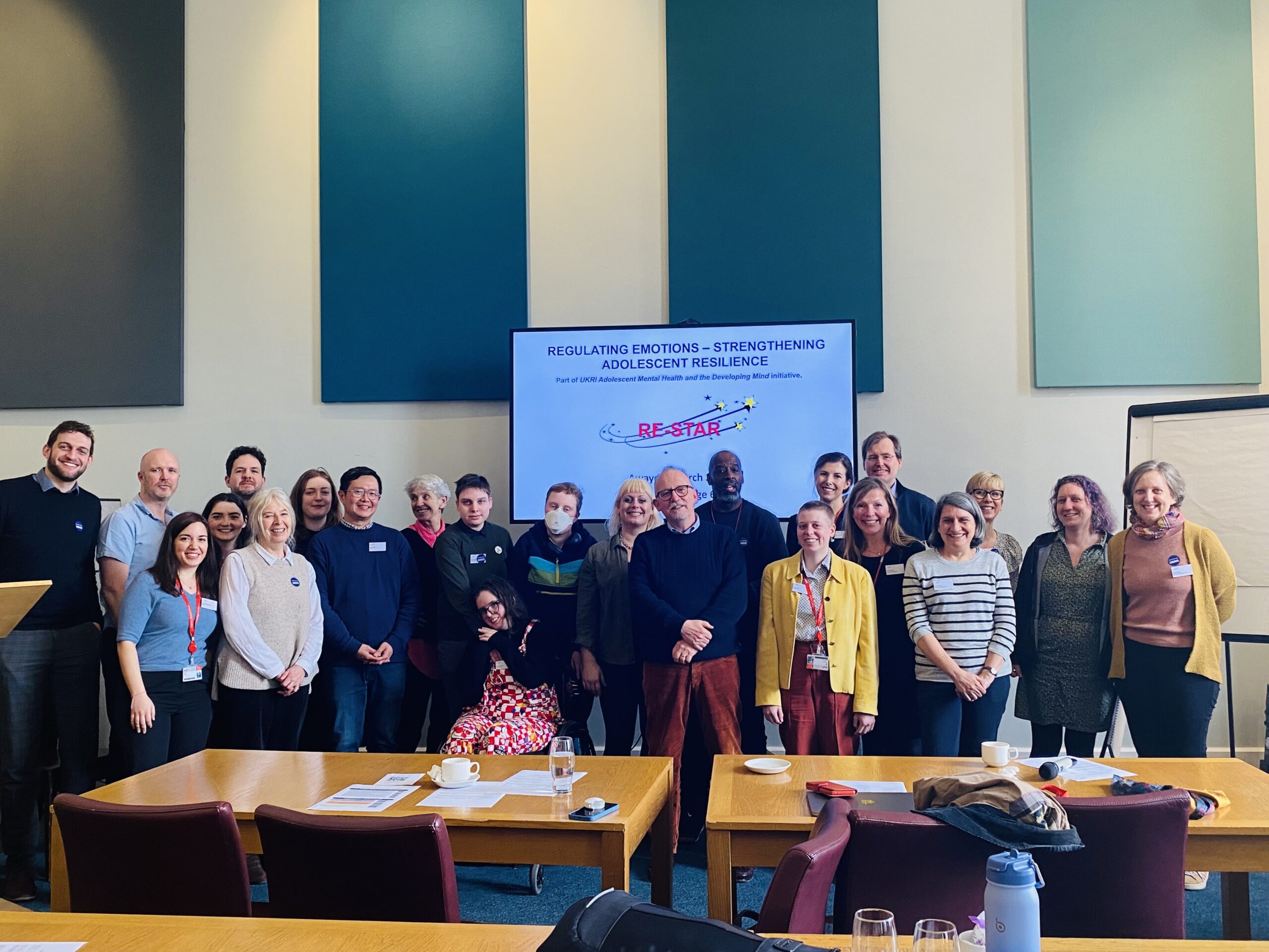
We are proud to share that Professor Edmund Sonuga-Barke, alongside colleagues from RE-STAR and members of the Youth Researcher Panel, have been awarded the Editor’s Choice award from the British Journal of Psychiatry (BJPsych) for his paper “Participatory translational science of neurodivergence: model for attention-deficit/hyperactivity disorder and autism research”.  

RE STAR Team

The Editor’s Choice award is given each year to celebrate outstanding and innovative research that makes a significant contribution to psychiatry and mental health science. 

In the award-winning paper, Professor Sonuga-Barke and the RE-STAR team set out a new approach to translational science for neurodevelopmental conditions like ADHD and autism. Central to this model is the meaningful involvement of neurodivergent young people, ensuring their experiences and insights help shape every stage of the research process, from generating new ideas to interpreting results. 

Speaking about the award, Professor Sonuga-Barke said: 

“The RE-STARs are overjoyed to receive this ‘Editor’s Choice’ award, from such a prestigious journal as the British Journal of Psychiatry, too. 

The paper in question, co-authored by RE-STAR academics and Youth Researcher Panel members, describes our pioneering new approach to the translational science of neurodevelopmental conditions such as autism and ADHD which places the insights and experiences of neurodivergent young people themselves at the very heart of our scientific endeavour. 

This approach has invigorated RE-STAR, allowing academic researchers and neurodivergent young people to work together to stimulate new ideas and hypotheses, develop new methods and collect and explore new interpretation. 

There is no doubt, in my mind that deepening the participation neurodivergent young people in this way, has been absolutely central to RE-STAR’s scientific success as it attempts to understand the origins of adolescent depression risk in ADHD and autism. 

From a personal point of view it’s been such a privilege to both lead and learn from such an incredibly talented and diverse set of people. 

Our hope is that this honour from the BJP will encourage other research teams to recognise the scientific value of deep participatory approaches and have the courage to adopt them.” 

Click here to read the paper 

Follow Us

For the latest updates and news, follow us on our social channels.