
How the King’s Maudsley Partnership is pioneering new, more effective treatment options for children with ADHD
-By Professor Philip Shaw, Director of King’s Maudsley Partnership
Over the past 25 years, I’ve been lucky enough to meet thousands of children and young people with ADHD who have taken part in research. In that time, public awareness of ADHD has grown enormously. It’s now part of everyday conversations. There have been great strides forwards in our understanding of the subtle brain and thinking differences that contribute to some of the experiences of living with ADHD – such as having problems staying focused.
But while awareness and understanding of ADHD have increased, the options available to support children and young people with ADHD have not kept pace. Most current treatments are medication-based, and while these can be effective, many families and young people tell us they want more choices — especially non-drug alternatives that are tailored to their child’s needs.
That’s where the King’s Maudsley Partnership comes in.
We are the world’s largest collaborative group of researchers and clinicians dedicated to improving outcomes for children and young people with ADHD. What makes us different is how we work: we don’t just study ADHD — we work with children and young people to ask the questions that matter most to them, and to find answers that can truly make a difference in their lives.
Our Approach
Our research spans three interconnected areas, each designed to drive innovation and real-world impact:
1. Discovery Science
We explore the societal and biological factors that influence ADHD – from cells to society, from neurons to neighbourhoods. Much of our current work focuses on how subtle differences in genes, the brain and thinking are tied to ADHD. We use cutting edge approaches particularly AI.
One exciting breakthrough we have already had involves using AI to predict how ADHD might develop over time. In a recent project, we combined genetic and brain imaging data to train a machine learning model that can predict — with over 80% accuracy — whether a child diagnosed with ADHD will continue to meet diagnostic criteria in adolescence. This kind of insight could be transformative for families and clinicians as they plan for the future and make decisions about care and support.
2. Collaborative Science
We’re redefining how ADHD is understood by working directly with young people. Together, we’re co-creating new ways to measure how ADHD affects daily life — especially in school. We also explore how ADHD overlaps with other neurodevelopmental conditions like autism, helping to build a more inclusive and accurate understanding of these experiences.
An example of this is our involvement within the Regulating Emotions – Strengthening Adolescent Resilience or RE-STAR Study. Many neurodivergent young people such as those with ADHD or autism traits develop depression during adolescence – but we currently don’t know which individuals are at risk, what underlying processes increase that risk or, perhaps most importantly, the best way to intervene to increase resilience to reduce that risk. RE-STAR will address these gaps by exploring the interplay between autism and/or ADHD traits, exposure to environmental stressors, and emotional responding in neurodivergent young people, in driving developmental pathways to depression.
3. Treatment Innovation
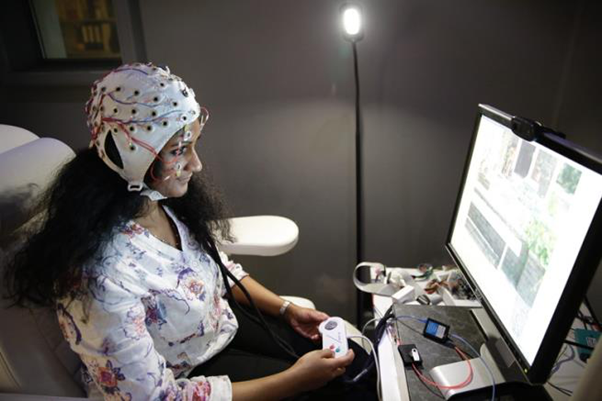
We’re developing and testing new interventions that go beyond medication. One area we’re exploring is brain therapies — treatments that aim to change brain activity in a safe, non-invasive way. Over decades of research we have identified the brain networks that function differently in some people with ADHD. Brain therapies targets these networks directly, rather than just managing behaviour.
We’re currently focusing on brain stimulation. Here, a gentle, painless, tiny electrical or magnetic field is applied to specific brain regions to improve attention and self-control. We are still testing these treatments. So far, we find they have minimal side effects and now we are looking to see if they offer longer-lasting benefits.
Other researchers are looking at how digital technologies, such as smart watches and mobile phone, can help youth with ADHD monitor how treatments impact on their attention and mood. Another focus is using on-line resources to help improve the sleep of those with ADHD, again asking if this will improve quality of life.
Pears Maudsley Centre
The Pears Maudsley Centre for Children and Young People, will enable us to transform our understanding of ADHD. The new Centre will bring cutting-edge research, clinical care, and community engagement under one roof. Though our commitment to inclusion, and access to move inclusive technology we will be able to rebalance the inequalities that have existed in research until now.
Want to learn more or get involved?
Join our free webinar ADHD: New Discoveries, Better Support on 4th November to hear more about the work happening on ADHD within the Partnership.
Stay connected with the King’s Maudsley Partnership as we continue to push boundaries, ask bold questions, and work alongside families and young people to shape the future of ADHD care. Email us at PMCYP@slam.nhs.uk to connect or follow us on our social media accounts.
Categories
Follow Us
For the latest updates and news, follow us on our social channels.