
Bringing together research and care: Three Research Champions on moving into the Pears Maudsley Centre
Across South London and Maudsley NHS Foundation Trust, more than 80 Research Champions are playing a role in connecting clinical teams with research, acting as the first point of contact for research-related activities in their teams.
As the Pears Maudsley Centre opens, with the aim of bringing together clinical services and research together under one roof, Research Champions will help make this a reality. They embed research into everyday practice by sharing opportunities for service users to take part in studies, supporting staff training and development, and passing on the latest evidence about clinical practice.
In this blog, we speak to three Research Champions who will be moving into the Pears Maudsley Centre. They reflect on how they bring research into their clinical work, why integrating research with care is important, and what they are looking forward to about being part of this innovative partnership.
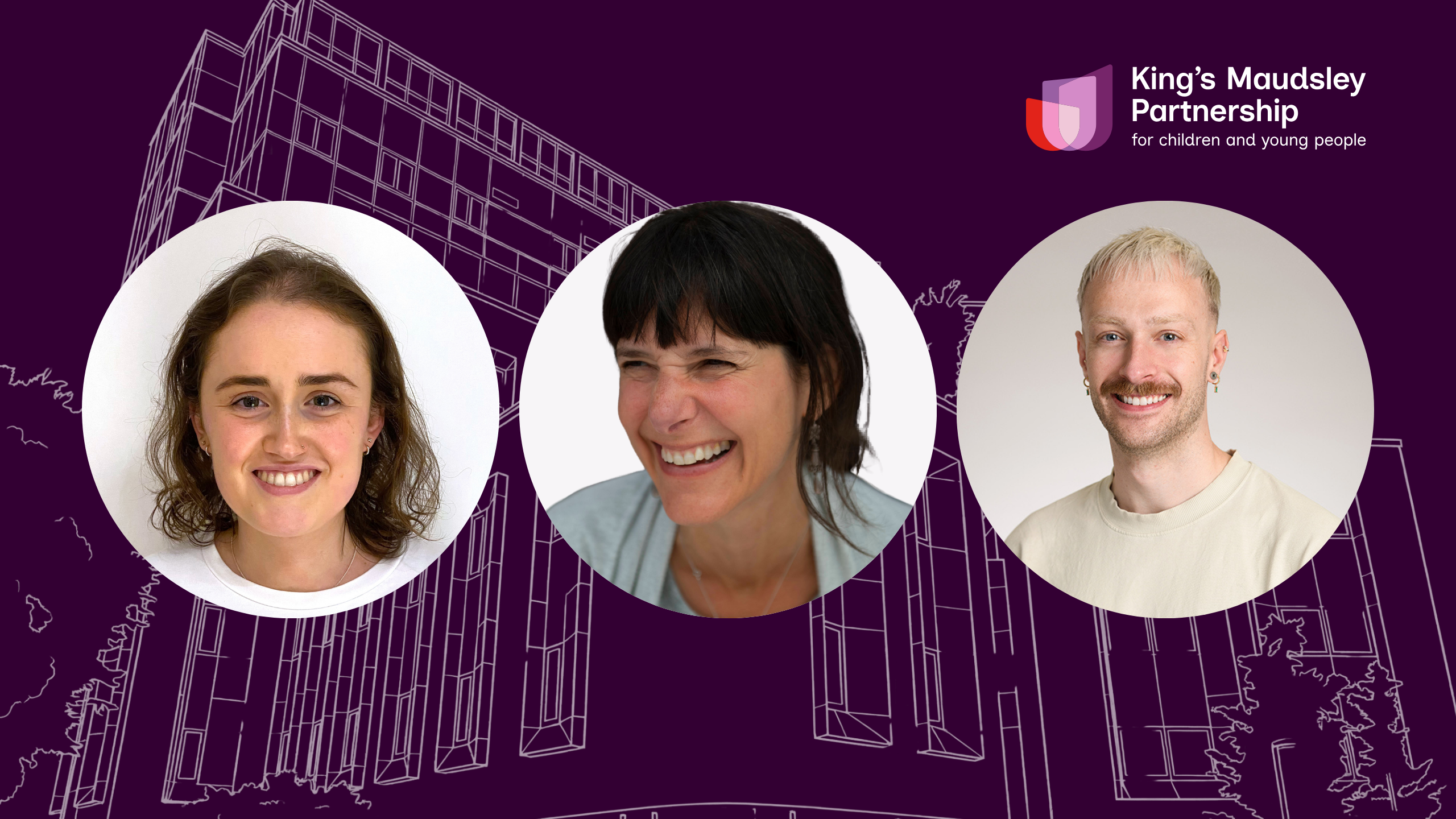
- (Left) Caitlin Nichol, Assistant Psychologist, Lewisham CAMHS
- (Middle) Simone Fox, Consultant Clinical and Forensic Psychologist, Multisystemic Therapy (MST) team
- (Right) Jake Camp, Senior Clinical Psychologist, National & Specialist CAMHS, Dialectical Behaviour Therapy (DBT) Service
What does the Research Champion role involve for you?
Jake: I carry out all the core Research Champion responsibilities: acting as a key contact for researchers recruiting to studies; answering research-related questions in our service, and disseminating available studies with our client group.
Caitlin: As a Research Champion, I have been promoting many research projects recruiting across the service, through discussion, presentations, emails, and research posters in clinic areas.
Simone: I have been taking the discussions and learning from the Research Champions’ meetings to my team within SLaM as well as our wider teams in the Multisystemic Therapy Network Partnership. I see my role as bridging the gap between research and clinical practice and ensuring what we are doing is embedded in the evidence base. We don’t work directly with patients in our service, so I’m not involved in study recruitment.
Do you bring research into your work in other ways?
Jake: I also have adjacent relevant roles that overlaps with the Research Champion role that are part of my role as research lead for my NHS service and my clinical academic fellow/senior lecturer role at King’s College London. This includes leading on research and service evaluation projects, applying for funding, consulting on projects, supervising clinicians and students to complete research projects, PPI, and dissemination work.
Simone: I am the research lead for the Multisystemic Therapy (MST) Team. This involves overseeing the research that is being undertaken across the MST partnership nationally and in Ireland. I co-ordinate and supervise a number of doctoral theses together with Royal Holloway University of London. I also chair a European MST Research group and we organise an annual online conference.
I also chair another research champions group, inspired by my role in the Trust, within the MST Network Partnership, bringing all the teams together with researchers. It was set up with representatives from each of the teams that we work with across England, Wales, Scotland and Ireland.
Why do you think it’s important or helpful for clinicians to be research aware and/or research active? Has being a Research Champion changed your own day to day work?
Caitlin: I think it’s helpful for clinicians to be aware of current research studies ongoing across the partnership, to ensure local voices are heard in research. Clinicians being able to discuss ongoing research with young people and their families demystifies research and can support more inclusive research practices. The role has given me time to think about how we improve access to research and ensure it is at the centre of clinical discussions.
Simone: It is vital that the work and interventions that are carried out by clinicians are guided by the evidence base – which is from the research. Research is important in improving practice and a better understanding of what works and what doesn’t. I am now more mindful of keeping research on the agenda with the team.
Jake: It’s important because we know that healthcare organisations with a close relationship to research tend to be the organisations that perform better. We also know that it supports evidence-based practice and data-driven innovations in practice as the gold standard; and that it supports clinicians to understand and use research, as well as potentially contribute to clinically-relevant research.
What are you looking forward to about moving into the Pears Maudsley Centre?
Simone: I am looking forward to making more connections across teams and learning from others.
Jake: I’m enthusiastic about the increased focus on clinical and academic partnership, and additional support structures of the King’s Maudsley Partnership. I have already built clinical academic links between South London and Maudsley and King’s College London, but expect it will be beneficial being under this umbrella in the longer-term.
I think the partnership will have a broader impact on those who are situated in either clinical practice or academia, and hopefully bring those a little closer together. So much collaboration and learning happens in those corridor chats or when we intersect with people for other reasons, and so the Pears Maudsley Centre will hopefully increase the likelihood of this.
Categories
Follow Us
For the latest updates and news, follow us on our social channels.
Sign up to our newsletter for more updates on the Pears Maudsley Centre and for ways you can get involved!